Nail Dust Extractors: How to Choose a Solution That Really Works
Dust created during filing and e-filing is not just a cosmetic issue, but above all a real health risk. In salon practice, micro-particles of keratin, gels, acrylics, and pigments are released into the air and can be inhaled. The difference between a basic dust extractor and a truly effective solution lies in two key factors: filtration design and motor performance.

The Real Problem in Practice: Why Basic Extractors Are Not Enough
A common salon scenario: a cheap extractor with a dust bag works at first, but after a few uses, performance drops significantly. After emptying the bag, performance improves only temporarily, while dust remains in the air and on the work surface.
From practice: If an extractor cannot maintain stable performance over time, it does not solve the problem – it only hides it.
What Really Matters: Filtration and Motor
Filtration Design
- Filter surface area – larger area means lower resistance and more stable performance
- Filter class – ideally HEPA or ULPA, optionally with activated carbon for odor control
- Sealing – prevents air bypass and loss of efficiency
- Aerodynamics – grille and airflow design affect both efficiency and noise
- Maintenance – easy replacement without interfering with the motor
Motor Parameters
- Radial fan – higher pressure, ideal for filtration systems
- Static pressure (Pa) – key indicator of real performance
- Airflow through filter – more relevant than airflow without a filter
- Speed control – stable performance and lower noise
- Motor construction – fewer vibrations, longer lifespan
Types of Dust Extractors in Practice
1) Dust Extractor with Bag
The simplest solution where dust is collected into a textile bag. However, it clogs quickly, causing a dramatic drop in performance.
- Result: dust continues to circulate, low efficiency
- Verdict: not suitable for professional use
2) Extractor with Filter Above the Motor (Basic Solution)


Filtration is better than with a bag, but a weak motor often cannot effectively pull air through fine filters.
- Advantage: better filtration than bag systems
- Disadvantage: unstable performance, risk of motor contamination
- Recommendation: suitable only for low usage
3) Professional Solution with Filter Above the Motor
Professional dust extractors use radial motors and multi-stage filtration systems.
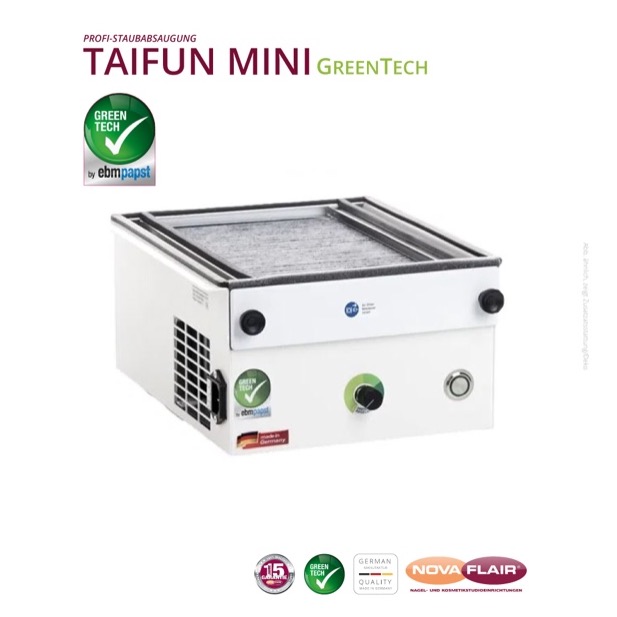
The result is high efficiency, stable performance, and low noise.
- Advantage: significantly higher filtration efficiency
- Limitation: filter remains above the motor → more frequent maintenance
4) Top Solution: Filtration Before the Motor
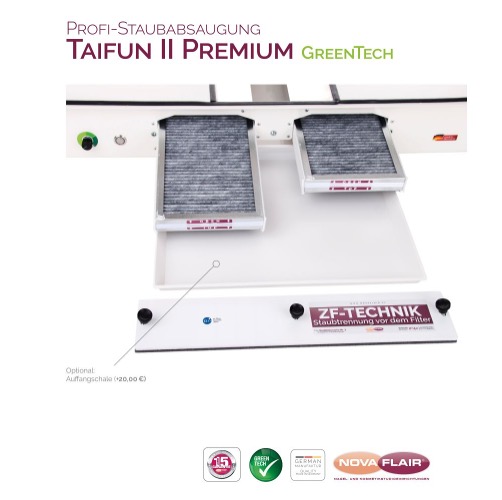
The highest level is represented by systems where filters are placed before the motor.
- Maximum motor protection
- Stable performance even under continuous use
- Longer maintenance intervals
Verdict: ideal solution for busy professional salons.
Price vs Performance: What You Are Really Paying For
- Filtration quality – ability to capture fine dust
- Motor performance – stability and lifespan
- Construction – noise, vibration, sealing
- Total cost of ownership (TCO) – fewer replacements, stable performance, lower long-term costs
Important: Marketing performance values without filters do not reflect real salon conditions.
How to Choose the Right Extractor for Your Salon
- Choose a radial motor with sufficient pressure
- Focus on filter class and surface area
- Avoid bag-based systems
- Consider your workload (home use vs. full-time salon)
- For daily use, choose a professional solution
FAQ – Most Common Questions from Practice
Is a cheap extractor enough to start?
Short-term yes, but it does not provide long-term protection or efficiency.
What is more important – power or filter?
Both. Without a filter, power is useless; without power, the filter cannot work.
How often should the filter be replaced?
Depending on usage, typically every few weeks to months.
Why does dust keep returning to the table?
The extractor lacks sufficient pressure or the filter is not properly sealed.
Article Author
This article was prepared by Daniel Král, specialist in NovaFlair dust extractors, and the DENATO team based on professional salon experience.
Updated
This article has been updated according to current knowledge and professional standards in nail technology.