TPO Legislation in Nail Products: What It Means for Nail Professionals
Dear professionals, changes in legislation regarding TPO have a direct impact on working with UV/LED materials in salon practice. This article provides a clear, verified, and practical overview – so you can work safely, legally, and with full confidence.
|
TPO has been commonly used in some UV/LED gels and gel polishes. However, from September 1, 2025, its use is banned within the EU. In this article, you will learn:
|
 |
What is TPO and why is it banned
TPO (Trimethylbenzoyl Diphenylphosphine Oxide) is a photoinitiator used in curing materials under UV/LED lamps.
According to EU legislation (Omnibus Act VII), its use is banned from September 1, 2025.
After this date, products containing TPO cannot be legally used or purchased within the EU – including in professional salon practice.
Official legislation can be found here:
EU Regulation – Omnibus Act VII
How we approached this at DENATO
- Immediate discontinuation of products containing TPO
- Transition to updated formulations without TPO
- Ensuring old and new versions were never sold simultaneously
- Transparent ingredient disclosure in documentation
This structured approach ensures consistency, safety, and full control in professional use.
What this means for your salon practice
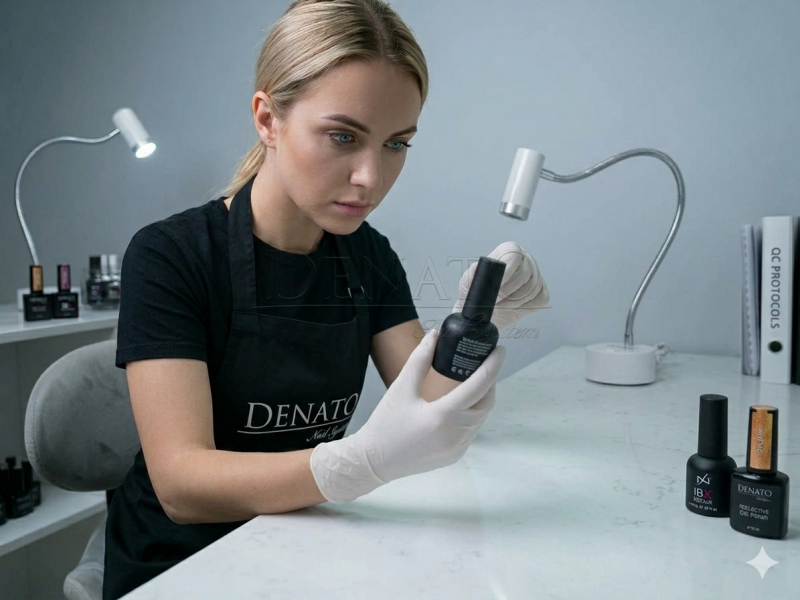
- Check all your stock and working products
- If a product contains TPO, do not use it after September 1, 2025
- Replace older products with updated formulations
The current range of UV/LED gels, builder gels, and gel polishes is fully compliant with current legislation.
How to identify TPO in ingredients
TPO may appear under different names:
- Diphenyl(2,4,6-trimethylbenzoyl)phosphine oxide
- Trimethylbenzoyl Diphenylphosphine Oxide
- Diphenyl(2,4,6-trimethylbenzoyl)phosphinoxide
- TPO
- Photoinitiator TPO
Most reliable identification: CAS 75980-60-8
What is NOT TPO
- Ethylphenyl(2,4,6-trimethylbenzoyl)phosphinate (TPO-L)
- Bis-Trimethylbenzoyl Phenylphosphine Oxide
Summary: TPO = banned | alternatives = allowed
Full list of affected products
Due to the scope and importance of accuracy, we recommend working with the complete and regularly updated list:
View full list of affected products and updated formulations
This list is continuously updated and serves as a reference point for material checks in your salon.
Practical material check process
- Review all products in your stock and workspace
- Check ingredients on the label or safety data sheet
- Compare with known TPO names
- Remove products containing TPO immediately
- Replace with compliant products
Regular material checks should be part of your professional standard – just like hygiene and proper nail preparation.
Common mistakes in salon practice
- Using old stock without checking ingredients
- Confusing TPO with similar substances
- Lack of inventory control
- Ignoring legislative updates
FAQ – practical questions
Can I continue using old products if they still perform well?
No. After September 1, 2025, products containing TPO are legally prohibited regardless of performance.
Where can I find the list of affected products?
On the official DENATO page (see link above).
Is TPO-L a safe alternative?
Yes, it is currently allowed under EU legislation.
How do I know if my product is updated?
Check that it contains no TPO and has up-to-date documentation.
Should I also check the IBX system?
Yes, we recommend checking all products, including the IBX system.
Author
This article was prepared by the DENATO expert team based on professional salon experience.
Operational information
If you are unsure about product selection, feel free to contact us. We will help you set up a safe and stable working system.
Updated
This article has been updated according to current knowledge and professional standards in nail technology.