
IBX System: professional solution for strengthening natural nails
IBX is not a traditional surface product, but a targeted penetrating system that works inside the nail plate. In salon practice, it provides a stable solution for clients with weak, peeling or damaged nails. When applied correctly, the IBX system improves nail integrity and allows safe work with gel polishes and other materials.
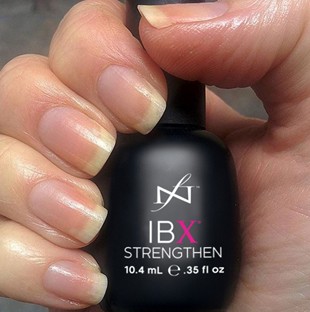
When to use IBX in salon practice
The IBX system has a wide range of applications, both for solving nail problems and as preventive care for natural nails.
- Under gel polish – as a protective layer supporting nail stability
- Protection of the nail plate against mechanical and chemical stress
- Reduction of white spots caused by long-term material wear
- Support for natural nail growth
- Filling ridges and unevenness with repeated use
- Improvement of nail appearance and colour
- Additional salon service with high added value
From practice: IBX is not a “quick fix”. The best results come with regular and consistent application.
How IBX works from a professional perspective
IBX is a two-phase penetrating monomer system that creates an IPN (interpenetrating polymer network) inside the nail after curing. Unlike traditional products, it does not act on the surface, but within the upper layers of the nail plate.
The result:
- bonding of weakened nail structures
- increased strength without unnecessary bulk
- better resistance when applying UV/LED gels and other systems
Function of individual system components
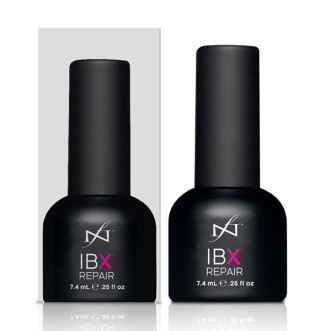
IBX Repair
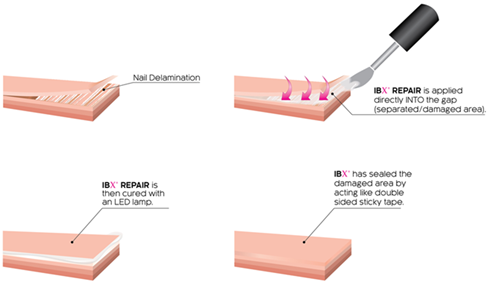
IBX Repair is a targeted product for local nail damage. It is first applied to damaged areas and then across the entire nail.
It works by binding weakened structures together, stabilising damaged layers and preventing further separation.
IBX Strengthen
IBX Strengthen is used for overall nail strengthening. After penetration and curing, it creates an IPN network that:
- fills micro-cracks and surface irregularities
- increases strength without losing flexibility
- supports the growth of long natural nails
Penetration is supported by a combination of heat and penetrating oils, allowing the product to enter the nail structure effectively.
What makes IBX different from standard strengthening products
The key difference lies in its mechanism of action:
- IBX works inside the nail, not on the surface
- it does not bind to keratin, but to itself – reducing brittleness
- it does not create a rigid layer, but a flexible internal structure
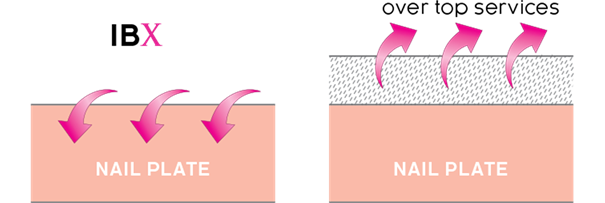
After curing, an IPN network is formed, strengthening the nail from within.

Correct application: the key to performance
IBX is applied like a nail polish, but its effectiveness depends on proper penetration.
Penetration is supported by:
- heat (45–50 °C)
- time
- clean, dry nails without product residue
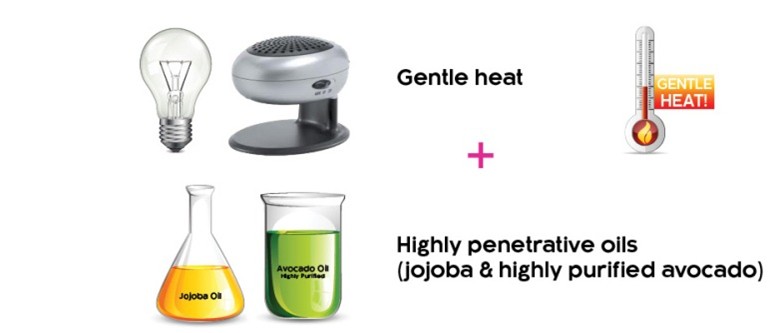
Important: The heat must be comfortable for the client. If it feels too hot, the product evaporates before penetrating the nail.
Most common mistakes when applying IBX
Wet manicure before application
Result: IBX cannot penetrate the nail due to water absorption.
Product residue on the nail
Result: IBX cures on the surface instead of inside the nail.
Incorrect temperature
Result: insufficient penetration or premature evaporation.
- optimal temperature: 45–50 °C
- suitable: low-power dryer on low setting
- unsuitable: excessive heat or too close distance
FAQ – common salon questions
Is IBX suitable under gel polish?
Yes, IBX improves nail stability and enhances adhesion of subsequent layers.
How often should IBX be applied?
For damaged nails, every 1–2 weeks is recommended, followed by a maintenance routine.
Can IBX replace nail enhancements?
No. IBX strengthens the natural nail but does not replace structural products like builder gels.
Why does IBX sometimes not work?
Usually due to incorrect nail preparation, improper temperature, or product residue on the nail.
Can IBX be combined with other systems?
Yes, it is fully compatible with gel polishes and other professional systems.
Author of the article
This article was prepared by Lucie Králová, IBX specialist, and the DENATO expert team based on professional salon experience.
Updated
This article has been updated according to current knowledge and professional practices in the nail industry.